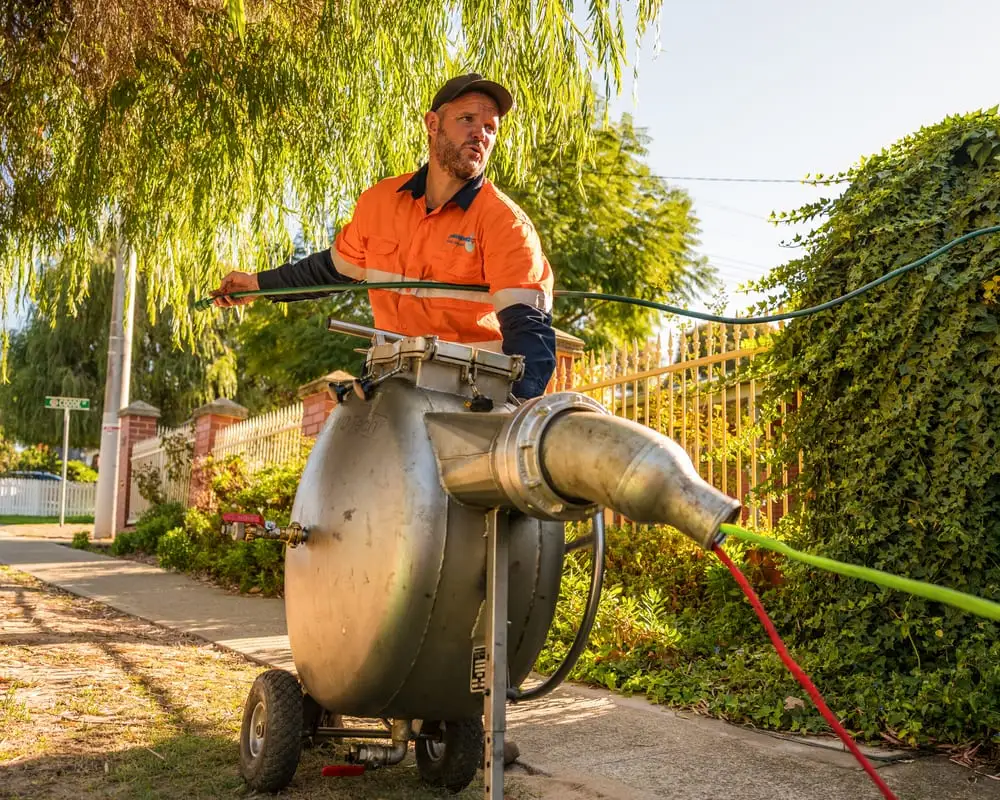
Pipe Relining Under Slab in Perth
Pipe relining under slab in Perth repairs a cracked or root-damaged drain beneath your house from the inside, so the tiles, floorboards, vanities and kitchen above it stay where they are. We put a camera through first and show you exactly where the fault is.
- The liner goes in from an access point, not through the floor
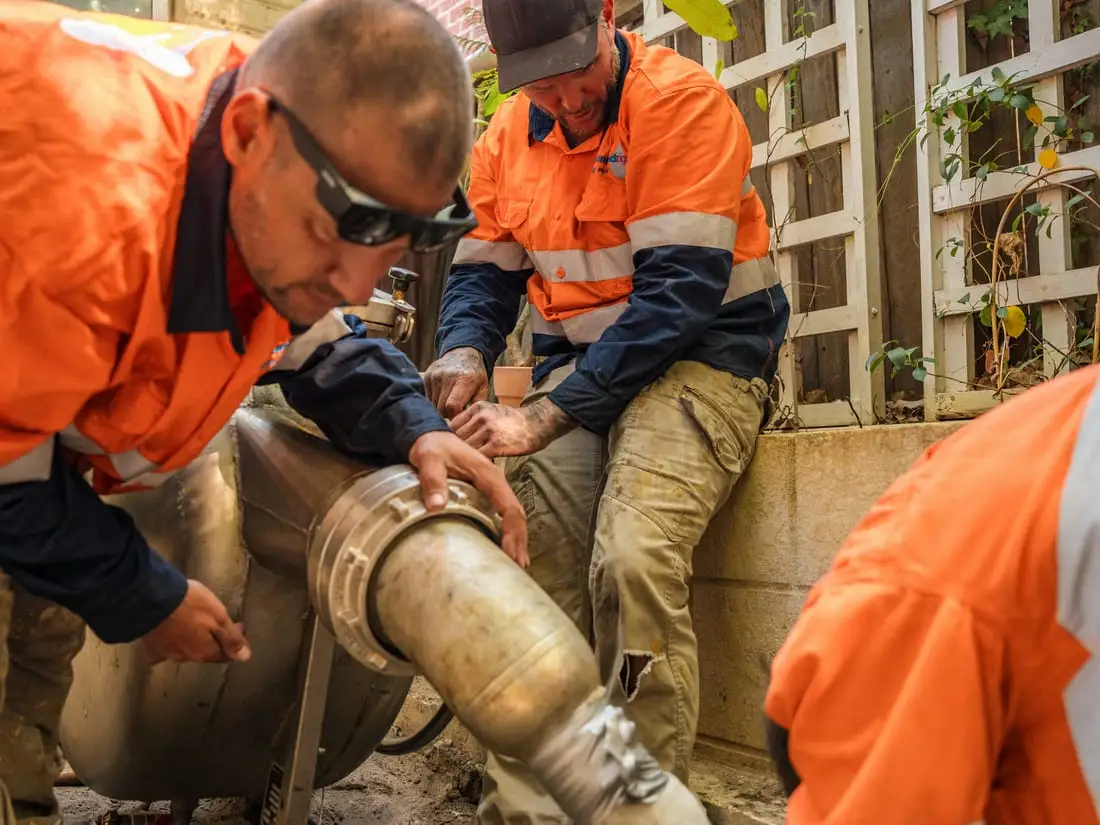
Camera before any quote
CCTV footage shows how far under the house the fault sits and what the pipe is made of.
Floors stay down
The liner travels along the old pipe, so the floor above is not trenched to reach it.
Drains only
We reline sewer, waste and stormwater lines. A leaking water supply pipe is a different trade.
Why Perth drains end up under the slab
Many Perth homes sit on a concrete slab poured straight onto the sand. The drains from the bathroom, ensuite, laundry and kitchen are laid before the pour, so once the house is built they run underneath it, joining up before they leave the footprint and head for the sewer outside.
That is fine for decades, until one of those lines cracks, a joint opens or roots follow it in from the garden. Then the pipe that needs fixing is under the one part of the property you least want opened up: the rooms you live in.
Signs a pipe under the slab is failing
- A shower, floor waste or basin that drains slowly, while fixtures outside are fine.
- A sewage smell inside the house with no blocked fixture to explain it.
- Drummy or lifting floor tiles, or cracked grout, near a bathroom or laundry.
- Skirting boards, cabinet kickboards or floor coverings swelling or staining near a wet area.
- The same bathroom or kitchen drain blocking again months after it was cleared.
Damp under a floor can also come from a water supply pipe or failed waterproofing, so none of these proves a broken drain on its own. For the wider list, see signs your pipes need relining.
What breaking the slab actually involves
Digging up a drain under a house means cutting a trench through the floor along the line of the pipe. Whatever sits on top has to come out first: tiles, timber or vinyl flooring, and often a toilet, a vanity, a shower base or a run of kitchen cabinets.
Then the concrete is broken out, the pipe replaced, and the trench backfilled and re-poured. In a wet area the waterproofing has to be redone before the tiler comes back, and tiles laid years ago are often no longer made, so the patch may not match. The room is out of use for the whole sequence, with the dust and noise of concrete cutting inside the house.
The pipe is usually the smaller part of that bill. The floor, the wet area and the joinery above it are the expensive half, and that is the half relining leaves alone.
CCTV first: finding the fault under the floor
A CCTV drain inspection runs a camera from an access point along the line under the house. The footage records how far along the pipe each crack, open joint or root intrusion sits, which tells us which room it is under, and whether it is on a branch from one fixture or on the main line everything drains into.
It also answers the question that decides everything else: is the pipe still holding its shape well enough to take a liner? You see the same footage we do, before any price is given.
How relining reaches a pipe under the house
Relining works from the ends of a pipe, not from above it. Once the line is cleaned, a resin-saturated liner is fed in from an existing access point, most often an inspection opening or a cut-in point outside the house, and run along the pipe to the damaged length under the slab. It is pressed against the old wall and cured there, leaving a new pipe inside the old one.
Where a bathroom or kitchen branch joins the relined section, the junction is reopened after the liner cures so that fixture drains as before. If a run has no usable access at all, one has to be made, and we say where at the inspection rather than on the day. For how the method works step by step, see how pipe relining works.
When under-slab relining is not the answer
A liner needs a host pipe to cure against. A section that has collapsed, or dropped so far under a settling slab that it holds standing water, may need to be opened up and relaid at the right fall. A leak in a water supply pipe needs a plumber, not a liner. The camera tells us which of these you have, and we will say so if relining is the wrong call. Where a drain section does need opening up, the same team can do it.
On most homes the under-slab drains are part of the house sewer, so the job runs as sewer pipe relining or residential pipe relining. For what moves the price, see pipe relining cost in Perth. If the damaged pipe runs under the driveway instead, the trade-offs change: see pipe relining under a driveway in Perth.
What people ask us about pipes under the slab
Do you have to work inside the house to reline a pipe under the slab?
Can a pipe under a bathroom or kitchen be relined?
Is the damp under my floor a drain or a water pipe?
What if the slab has moved and the pipe has dropped?
Drain problem under the house?
Tell us where the property is and which rooms are affected. We will get a camera under the slab, show you where the fault is, and quote to fix it from an access point instead of through the floor.