Clay Pipe Relining in Perth
Clay pipe relining in Perth puts a new, jointless pipe inside an old clay or earthenware sewer without digging it up. Clay fails at its joints, so we find the open ones on camera first, then line the run so there is no joint left for roots or water to get through.
- Vitrified clay is the standard sewer pipe in many of Perth's older suburbs
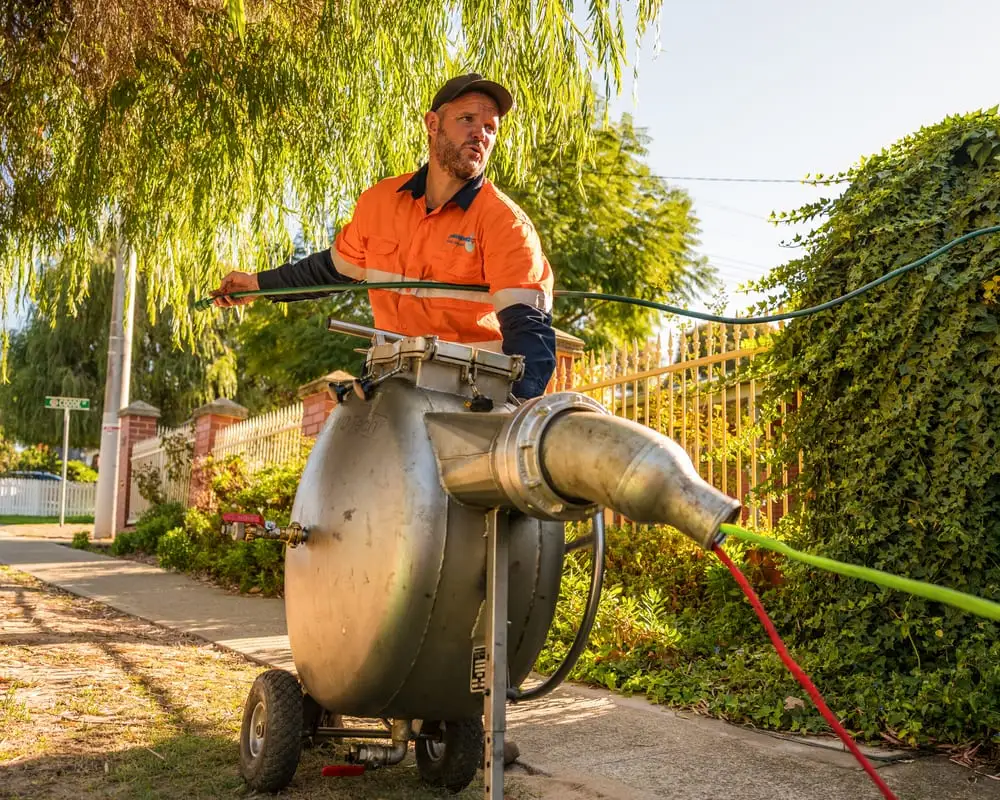
Camera first
We run CCTV through the clay line and show you every open joint and crack before quoting.
Joints closed from inside
A cured liner runs straight past the old joints, so the relined length is one continuous wall.
Garden and paving stay put
The liner goes in through an access point, not a trench along the line.
Why old clay sewer pipe fails
A clay sewer is not one pipe. It is a string of short lengths, each pushed into the socket of the next, so a single run from the house to the connection can have a joint every short stretch of its length. The clay itself is hard and does not corrode. The joints are where it lets go.
- Root entry. Roots follow the moisture seeping from a joint, get in, and thicken until the joint opens further.
- Ground movement. Perth's sandy soil moves as it wets and dries, and rigid clay lengths cannot flex with it, so joints shift out of line.
- Cracking. Clay goes brittle with age. A root pushing on a joint, or load from above, can crack the length around it.
Each of these starts at, or near, a joint. That is why clay problems tend to come back in the same places, and why a clay line with one bad joint often has others.
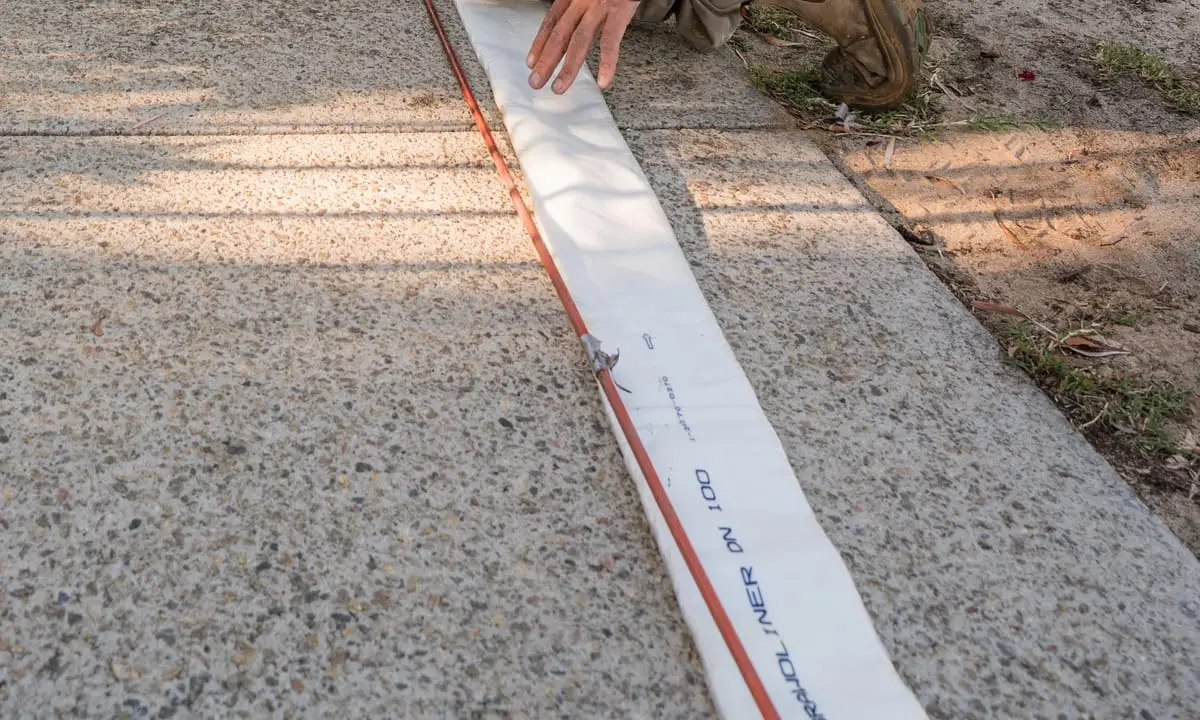
A clay run before and after relining
What the camera looks for in a clay line
A CCTV drain inspection goes through the line from an existing access point and records each joint as it passes. On clay, we are looking for joints that have opened or dropped out of line, roots coming through, cracks along a length, pieces of wall missing, and any stretch that holds water because the ground under it has sunk.
You see the same footage we do. It tells us how many joints are affected, how far apart they are, and whether the pipe still holds its shape well enough to line. If roots are the main problem, our page on tree roots in pipes goes into why cutting them out on its own does not last.
How relining turns a jointed clay pipe into one pipe
Roots are cut back and the line is jetted clean, so the liner has a clean wall to bond to. A resin-saturated liner then goes in through the access point, is pressed against the old clay and cures hard in place. Along the relined length, the joints are no longer part of the pipe that carries the flow. There is one smooth, continuous wall with no gap for a root to find and no joint for moving sand to pull apart.
The clay stays in the ground and acts as the outer shell, so the lawn, paving and garden above it stay where they are. For how the job runs on a house sewer, see sewer pipe repair and relining, and for each step in order, see how pipe relining works. What moves the price is on our pipe relining cost page.
When a clay pipe is not a relining job
A liner needs a pipe to form against. Where a clay section has collapsed or been crushed, there is no shape left to line, and that section has to be dug up and replaced. Where the ground has sunk and a stretch no longer falls toward the sewer, a liner follows the dip and keeps it. In both cases the answer can be to replace one section and line the rest, and the same team can do both.
We will tell you which you have from the footage. If you are weighing it up, our page on whether pipe relining is worth it sets out when digging is the better call.
Not every old pipe fails like clay. Cast iron corrodes along its wall from the inside rather than letting go at the joints, and it needs a different kind of preparation. See cast iron pipe relining in Perth. For asbestos cement lines, see asbestos pipe relining.
What people ask us about clay pipe relining
Can you reline terracotta pipes?
How do I know if my sewer is clay?
Does the whole clay line need relining?
Will relining make my clay pipe narrower?
Is clay pipe relining different from cast iron pipe relining?
Old clay sewer giving trouble?
Tell us where the property is and what the drain is doing. We will run the camera, show you the joints, and quote to line the run.